

Every year, millions of pets go missing across the United States. We see heartbroken families come through our doors, hoping we can help locate a lost dog or cat. The truth is, the single most effective step any owner can take is scheduling a visit to a pet microchipping vet before disaster strikes. A microchip is a permanent, tamper-proof form of identification that gives your pet a lifelong safety net. It costs less than most people expect, takes under a minute to place, and can mean the difference between a joyful reunion and a permanent loss. In this guide, we cover exactly what microchipping involves, what to expect during the procedure, and why it is one of the most important decisions you will make as a pet owner.
What Is Pet Microchipping and Why Does It Matter?
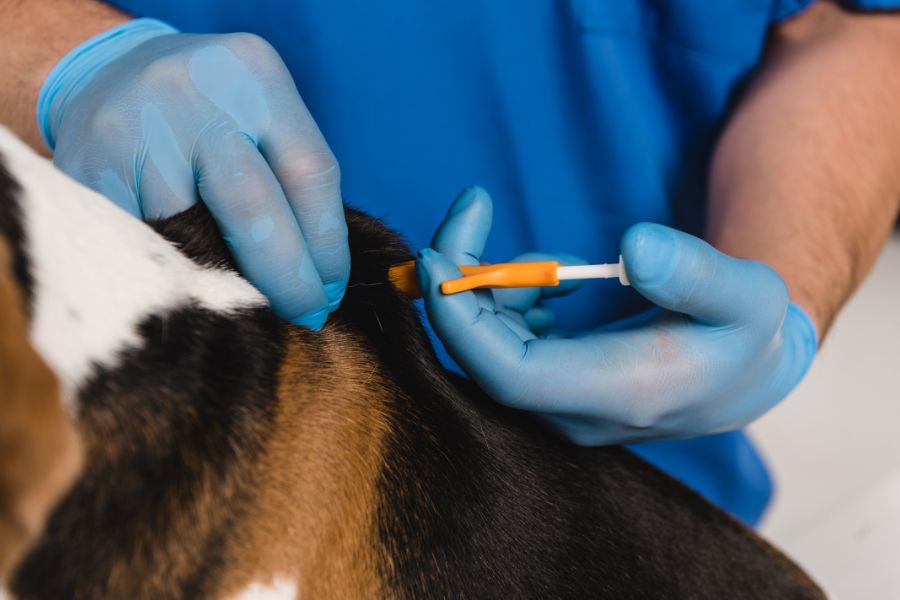
A microchip is a tiny electronic device, roughly the size of a grain of rice. It is implanted just beneath the skin, typically between the shoulder blades, using a sterile needle. No surgery or anesthesia is required.
Each chip contains a unique identification number. When a lost pet is brought to a shelter or veterinary clinic, staff members use a universal scanner to read that number. The number links to your contact information in a national database, allowing a quick reunion.
According to the American Veterinary Medical Association (AVMA), microchipped dogs are more than twice as likely to be reunited with their owners compared to dogs without chips. For cats, the return rate is even more dramatically improved. One permanent chip provides a lifetime of protection that no collar tag can match.
Signs Your Pet Is at Higher Risk of Getting Lost
Some pets are more likely to wander than others. Watch for these behaviors as early warning signs that your pet needs a microchip as soon as possible:
- Escape history: If your pet has slipped out of a yard, harness, or collar before, it will likely happen again.
- High prey drive: Dogs that chase squirrels, birds, or other animals can bolt without warning.
- Storm anxiety: Pets with noise phobia often bolt during thunderstorms or fireworks events.
- Outdoor cats: Cats that spend time outside face far greater risks than indoor-only cats.
- New environments: Moves, vacations, or family events can disorient even the calmest pets.
In our experience, pet owners often do not think about microchipping until after a scare. Do not wait for a close call to take action. A chip placed today protects your pet every day going forward.
What to Expect During the Procedure
The pet ID chip procedure is quick, straightforward, and well-tolerated by most animals. Here is exactly what happens during a microchipping appointment at our clinic in Kinston:
- Check-in and weight measurement. We record your pet’s current weight and confirm their health status before proceeding.
- Site preparation. The injection area between the shoulder blades is lightly cleaned.
- Chip placement. A sterile needle delivers the chip beneath the skin in a single, swift motion. Most pets react no more than they would to a routine vaccine.
- Scanner verification. We immediately scan the site to confirm the chip is reading correctly.
- Registration guidance. We walk you through completing microchip registration for pets in a national database using your current contact details.
The entire visit typically takes under 15 minutes. No sedation is needed for healthy adult dogs and cats. Puppies and kittens can be chipped as young as eight weeks of age.
Does a Microchip Replace a Collar and Tags?
This is one of the most common questions we get from pet owners. The short answer is no, but it is a more nuanced topic than most people realize.
When comparing microchip vs pet collar options, it helps to understand what each does well. A collar with a tag is immediately visible to any neighbor or passerby who finds your pet. That makes it very useful for fast, informal reunions. However, collars can break, slip off, or be removed. A microchip cannot be lost, removed, or damaged under normal circumstances.
The AVMA and AAHA both recommend using both forms of identification together. A visible collar gives strangers a way to contact you on the spot. A microchip serves as a permanent backup when the collar is gone. Pet owners in Eastern North Carolina often deal with pets coming home muddy, wet, or collarless after outdoor adventures. In those situations, a microchip becomes essential.
We frequently remind our clients that microchip vs pet collar is not an either-or choice. Use both. The chip is your safety net; the collar is your first line of communication.
Keeping Your Microchip Information Current
Placing the chip is only half the process. Many lost pets go unreturned, not because they lack a chip, but because the chip’s registration is outdated or incomplete.
Microchip registration for pets must be kept current at any time your contact information changes. This includes a new phone number, a new address, or even a new email. Updating your record typically takes five minutes online. Yet according to industry estimates, a significant percentage of chips in the United States are either unregistered or linked to outdated owner details.
Lost pet recovery tips from shelter professionals consistently highlight this issue. If a staff member scans your pet and finds a chip number that links to a disconnected phone, your pet may spend days in a shelter while you search. Check your registration every year, especially after any major life change.
We also recommend using a national universal registry rather than a brand-specific one. This ensures any veterinary clinic in Kinston or shelter in the country can access your information regardless of which scanner they use.
Conclusion
Microchipping your pet is one of the most responsible things you can do as an owner. It takes less time than a typical office visit, costs very little, and provides permanent protection that no tag or collar can replicate. Pet owners in Kinston and throughout Eastern North Carolina count on the procedure to give them real peace of mind every single day. If your dog or cat is not yet chipped, now is the time to act. A lost pet recovery tips checklist means nothing without a chip to back it up. Visit a pet microchipping vet and get your pet protected for life. Book an appointment today.
Frequently Asked Questions
Does microchipping hurt my pet?
Ans: Most pets experience minimal discomfort during microchipping. The chip is inserted using a needle similar in size to those used for standard vaccines. Many dogs and cats barely react. No anesthesia is required for healthy adult animals.
How long does a pet microchip last?
Ans: A microchip is designed to last your pet’s entire lifetime. It has no battery or moving parts. Once implanted, it does not need to be replaced or recharged under normal circumstances.
What should I do after my pet is microchipped?
Ans: Register the chip number in a national pet recovery database immediately after the procedure. Include your current phone number, address, and email. Update those details any time your contact information changes.
Can my cat be microchipped, or is it just for dogs?
Ans: Microchipping is safe and recommended for both dogs and cats. It is also commonly used for rabbits, birds, and other companion animals. Your veterinarian can advise whether the procedure is appropriate for your specific pet.
What happens if my pet is found without a collar but has a chip?
Ans: Any veterinary clinic or animal shelter with a universal scanner can read the chip and retrieve your contact information from the registry. This is exactly why registering and keeping your information current is so important.