

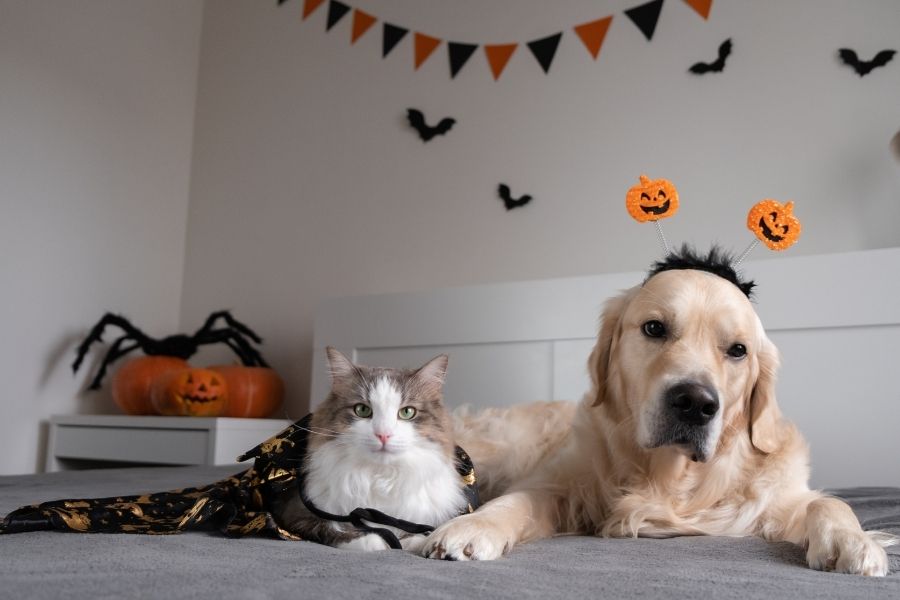
For most families, Halloween night is about fun, costumes, and candy. For veterinarians, it is one of the most consistently busy and high-stakes nights of the year. Understanding why Halloween is dangerous for pets is not just trivia. It helps pet owners make decisions that keep their animals out of the clinic and safe at home. Every October, veterinary practices across the country see a dramatic increase in calls and walk-ins related to candy ingestion, stress reactions, escaped pets, and foreign body obstructions. The pattern is predictable, and almost entirely preventable. This article breaks down what veterinarians actually see on and around Halloween, which situations become urgent, and what pet owners can do before the night begins to protect their animals.
What Veterinarians Actually See Spike on Halloween Night
Halloween generates a specific and well-documented surge in veterinary cases. Pets seen by vets on halloween overwhelmingly fall into a few recurring categories.
Candy and food toxicity cases represent the largest share. Chocolate is the most common offender, followed closely by products containing xylitol, an artificial sweetener found in sugar-free gummies, mints, and some flavored candies. Raisins, often hidden inside trail mix-style Halloween offerings, round out the top three food-related toxins. In households where candy is left accessible, dogs in particular will eat far more than a pet owner realizes before anyone notices.
Gastrointestinal obstruction cases also climb. Candy wrappers, lollipop sticks, foil packaging, and small plastic decoration pieces are all swallowed by pets during Halloween. These do not always pass on their own and can require intervention if they cause a blockage.
Stress and anxiety calls increase significantly as well, particularly for cats and sound-sensitive dogs. The constant doorbell activity, strangers in unusual outfits, and loud outdoor noise of children in large groups can push already-anxious pets into a crisis response.
Lost and escaped pets represent another category. The repeated opening of front doors during trick-or-treating creates escape opportunities, and pets that bolt into the dark during high foot traffic can be extremely difficult to recover quickly.
The Food Toxins That Drive the Most Halloween Cases
The sheer variety of candy distributed on Halloween is part of what makes the night so unpredictable for veterinarians. Halloween pet toxin ingestion cases involve many different substances, and the severity varies by what was eaten, how much, and the size of the pet.
- Theobromine from chocolate: Found in all chocolate, with the highest concentration in dark and baking varieties. Causes vomiting, muscle tremors, elevated heart rate, and in severe cases, seizures. Most cases that come in are dogs who found a stash of mixed candy and helped themselves.
- Xylitol: Causes a rapid and dangerous drop in blood sugar in dogs, sometimes within 30 minutes of ingestion. Liver failure can follow. Pet owners frequently do not realize xylitol is present because they associate the ingredient with gum, not Halloween candy.
- Raisins: Toxic to both dogs and cats, with acute kidney failure as the most serious outcome. The toxic mechanism is still not fully understood, which makes any amount of raisin ingestion something to take seriously.
- Macadamia nuts: Present in certain novelty treat bags. Cause weakness, tremors, and elevated body temperature. Usually resolve with supportive care, but still require veterinary evaluation.
- Candy wrappers and foil packaging: Not chemically toxic, but a physical hazard that can cause intestinal blockage, vomiting, and abdominal pain.
Why the Hours Before Midnight Matter Most
The majority of Halloween pet toxin ingestion cases that become serious are ones where treatment was delayed because the pet owner was not sure whether the situation warranted a call. A consistent observation from veterinary practice: dogs and cats often appear completely normal in the first hour or two after ingesting a toxin and then deteriorate rapidly once the substance reaches peak concentration in the bloodstream.
This creates a dangerous window. Pet owners see a dog that seems fine and assume everything is fine. By the time symptoms appear, the toxin has already been absorbed, and treatment is more intensive.
The veterinary recommendation is simple: if you know or strongly suspect your pet ate something they should not have, call your veterinarian or a pet poison hotline before symptoms appear. The sooner treatment begins, the better the outcome in nearly every case.
Dog cat candy poisoning signs to watch for include vomiting or diarrhea, trembling, excessive drooling, pale gums, lethargy, loss of coordination, and, in severe cases, seizures or collapse. Any of these signs after possible candy exposure should be treated as needing immediate veterinary attention.
In Kinston, NC, our vet team at Riverbank Animal Hospital sees an increase in Halloween-related cases every October without exception. The cases that resolve most smoothly are always the ones where the pet owner called early.
Why Halloween Is Dangerous for Pets Beyond Just Candy
Candy gets most of the attention, but why Halloween is dangerous for pets extends to hazards that have nothing to do with food.
Decorations are a larger risk than most pet owners realize. Candles inside carved pumpkins can burn a curious cat. Motion-activated figures with sounds and lights can startle a dog into a flight response. Decorative corn, fake spiderwebs, and small plastic skulls or prop pieces are all candidates for ingestion.
Costumes on pets are a source of stress injuries. Ill-fitting costumes can restrict breathing, impair vision, catch on objects, or cause overheating. Pets that are forced into uncomfortable costumes and cannot communicate their distress will sometimes bite or injure themselves trying to remove the costume.
Essential oil diffusers used for Halloween atmospheres, especially cinnamon, clove, and nutmeg scents, are directly toxic to cats and can cause respiratory irritation in dogs. Many owners do not make the connection between a diffuser running in the background and a pet that suddenly seems unwell.
A common misconception is that keeping pets indoors is sufficient to protect them on Halloween. Indoor access alone does not address candy left on counters, hazardous decorations, costume distress, or aromatic toxins in the air. A genuinely safe Halloween for pets requires looking at all of these risk factors at once.
How to Keep Pets Safe and Keep Halloween Fun
Preparation done before October 31st removes most of the risk. These Halloween pet safety tips are practical and take less time than a trip to the veterinary clinic.
Store all candy in sealed containers placed well out of reach, including out of bags left near the front door. Replace all open-flame candles with battery-operated versions. Secure your pet in a room they are comfortable in before the doorbell starts ringing. Brief any children in the household about never sharing Halloween candy with pets.
Do a walk-through of your home from your pet’s perspective. Look for decorations at floor level, dangling cords, and anything small enough to be swallowed. Swap out hazardous decorations for pet-safer alternatives: fabric banners instead of dangling plastic, LED lights instead of candles, and soft plush decorations instead of hard plastic props.
If your pet is known to be sound-sensitive or has a history of anxiety, speak with your veterinarian before Halloween about management options. Behavioral support and calming tools work best when introduced in advance, not during the crisis.
The vet team at Riverbank Animal Hospital, providing veterinary care that wants every pet in the area to have a safe, uneventful Halloween. Knowing what the risks are, and acting on that knowledge before the night begins, is exactly what keeps pets out of the clinic and home where they belong. Book an appointment today.
Frequently Asked Questions
Q: Why do vets get so busy on Halloween?
Ans: Halloween combines multiple hazards into a single night: candy toxicity, decoration ingestion, stress responses, costume injuries, and escaped pets. The result is a predictable spike in veterinary cases every October. Most cases involve dogs eating candy left within reach, but cats are also commonly seen for glow stick exposure, decoration ingestion, and stress reactions.
Q: What Halloween candy is most dangerous for dogs?
Ans: Dark chocolate and baking chocolate are the most toxic by volume. Sugar-free candies containing xylitol are among the most dangerous overall because even small amounts can cause a life-threatening drop in blood sugar. Raisins, macadamia nuts, and any candy with foil or plastic wrappers also pose serious risks.
Q: How quickly do Halloween candy symptoms appear in dogs?
Ans: Symptoms can appear within 30 minutes for xylitol ingestion. Chocolate symptoms typically appear within one to four hours. Some toxins, including raisins, may not show visible symptoms for 12 to 24 hours even as organ damage is occurring. Never wait for symptoms to appear before calling your veterinarian.
Q: Can cats be affected by Halloween candy too?
Ans: Yes. Cats are less likely to eat large amounts of candy than dogs, but chocolate and xylitol are toxic to cats as well. Cats are also highly susceptible to aromatic toxins, including essential oils in Halloween-themed diffusers. Glow sticks are another common hazard for cats who are attracted to the movement and chew them.
Q: What should I have ready before Halloween to protect my pet?
Ans: Keep your veterinarian’s phone number and a pet poison hotline number saved in your phone. Have your pet’s current weight available. Store all candy in sealed, elevated containers. Set up a safe room for your pet before trick-or-treating begins. Check your home for decoration. hazards at pet level. These five steps cover the majority of Halloween risks for most households.
