
Some cats are independent spirits who want affection strictly on their own schedule. Then there are the fluffy cat breeds that seem wired for closeness, ones who follow you room to room, drape themselves across your legs the moment you sit down, and purr loud enough to drown out the television. If you have been dreaming of a big, soft, cuddly companion who genuinely loves being held, you are in the right place. This guide covers eight breeds known for their plush coats and their people-loving personalities. Whether you are a first-time cat owner or adding a second cat to a busy household, these breeds are worth knowing. Read on to find your perfect match.
Eight Fluffy Cat Breeds That Love Being Close
These fluffy cat breeds combine impressive size, breathtaking coats, and calm, affectionate temperaments. Each one on this list has a long track record as a devoted companion.
- Maine Coon Maine Coons are one of the largest domestic cat breeds in the world, with males regularly reaching 15 to 25 pounds. Their thick, shaggy coats were built for cold New England winters, but their personalities were built for family life. They are playful, dog-like in their loyalty, and surprisingly gentle with children. Maine Coons do not typically demand to sit in your lap they prefer to sit beside you, staying in your orbit at all times.
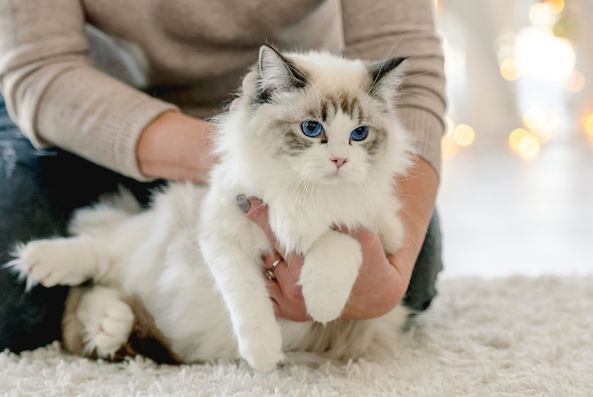
- Ragdoll The Ragdoll earns its name by going limp when picked up, a trait that signals just how relaxed and trusting these cats are. They are among the best lap cat breeds available, with a quiet, easygoing nature that makes them ideal for apartment living. Ragdolls are large, blue-eyed, and covered in silky semi-long fur that is surprisingly easy to maintain.
- Persian Persians are the classic image of a pampered lap cat. Their long, dense coats and flat, expressive faces are immediately recognizable. They are calm, quiet, and deeply attached to their owners. Persians are not climbers or explorers. They prefer a soft surface and a warm human to sit with. Daily grooming is non-negotiable for this breed, but for owners who enjoy that routine, the bond it builds is worth every minute.
- Norwegian Forest Cat The Norwegian Forest Cat, called the “Wegie” by fans, has a thick double coat designed to shed water and resist freezing temperatures. Despite their rugged exterior, Wegies are gentle, patient, and affectionate. They tend to be more independent than Ragdolls or Persians but still seek regular human connection. Their coats shed seasonally, with two major blowouts per year.
- Siberian Siberians are a powerfully built breed from Russia with a dense triple-layer coat. They are athletic and curious but also remarkably calm. Many allergy-prone cat lovers report fewer reactions to Siberians, though no cat breed is truly hypoallergenic. Siberians bond strongly with their families and will often follow their favorite person from room to room.
- Birman Birmans are medium-to-large cats with silky, color-pointed coats and striking white “gloves” on their paws. They are affectionate without being clingy and social without being loud. Birmans adapt well to multi-pet households and tend to get along with respectful children. Their semi-long coats do not mat as easily as Persian fur, making grooming more manageable.
- British Shorthair While the British Shorthair does not have the flowing coat of a Maine Coon or Persian, its incredibly dense, plush fur earns it a spot on any list of best lap cat breeds. These cats are calm, easy-going, and quietly devoted. They prefer sitting beside you over sitting on you, but they will always be nearby. Their stocky, rounded build and thick coat make them feel like living stuffed animals.
- Himalayan The Himalayan is a cross between a Persian and a Siamese, combining the Persian’s fluffy coat with the Siamese’s color-point markings and expressive blue eyes. Himalayans are gentle, quiet, and deeply loyal. They thrive in calm homes and do not handle stress well. Like Persians, they require daily coat care to prevent mats and tangles.
What to Know Before Bringing a Fluffy Cat Home
Owning one of these breeds is genuinely rewarding, but it does come with responsibilities that first-time cat owners sometimes underestimate. Understanding what to expect will help you prepare.
Grooming needs are real. Long-haired cat care is a daily commitment for most of these breeds, particularly Persians and Himalayans. Without regular brushing, dense coats can develop painful mats close to the skin. A slicker brush and a wide-tooth metal comb are essential tools. Many owners also schedule professional grooming every six to eight weeks.
Watch for breed-specific health concerns. Maine Coons are prone to hypertrophic cardiomyopathy, a heart condition that can develop without obvious symptoms. Persians and Himalayans are prone to breathing issues related to their flat facial structure. Regular veterinary care for cats in these breeds often includes targeted screenings for these conditions, which is why annual wellness exams matter so much.
Coat type affects shedding volume. Norwegian Forest cats and Siberians have seasonal blowouts where shedding increases dramatically. Brushing frequency should increase during these periods to prevent hairballs and reduce fur accumulation on furniture.
Size means more food and more space. Maine Coons and Siberians in particular need room to stretch. A large cat tree, a window perch, and enough floor space to move comfortably will keep a big cat content.
Keeping a Fluffy Cat’s Coat Healthy Year-Round
A healthy coat starts from the inside. Nutrition plays a large role in coat quality. Cats fed a high-protein diet with adequate omega fatty acids tend to have shinier, less brittle fur. If you notice excessive shedding, dull fur, or coat thinning, it is worth mentioning to your veterinarian. These can be early signs of thyroid issues, nutritional deficiencies, or skin conditions rather than simple grooming neglect.
For indoor cat grooming tips that actually work, consistency matters more than frequency. A five-minute brushing session every day is far more effective than a 30-minute battle once a week. Start grooming routines when your cat is young so the process becomes familiar and comfortable. Focus on the areas most prone to matting: behind the ears, under the armpits, around the collar area, and along the belly.
Bathing is rarely necessary for most breeds but can be helpful before heavy shedding seasons or if a cat gets into something messy. Use a cat-safe shampoo and dry thoroughly after bathing to prevent chilling or skin irritation.
One often overlooked part of coat health is parasite prevention. Fleas are far more difficult to spot in a dense, long coat, and by the time an infestation is visible, it is already significant. Year-round flea prevention is especially important for fluffy cats, even those that stay indoors. Many indoor cats encounter fleas through open doors, other pets, or items brought in from outside. In Kinston, NC, where warm and humid conditions persist through much of the year, flea pressure remains elevated for longer stretches than in cooler climates.
The Calm Side of These Breeds: What Makes Them Great Lap Cats
Most of the breeds on this list fall into the low-energy cat breeds category in terms of their baseline resting behavior. They are not lazy; they do enjoy play sessions, but they are not high-drive cats that need constant stimulation to stay calm. That is what makes them so suited to lap life.
Low-energy cat breeds tend to adapt well to apartment living, quieter households, and owners who work from home. They enjoy watching activity around them and will often settle near you during a movie, a work call, or a quiet evening. They are not the type to sprint across your keyboard at 2 a.m.
That said, even calm cats need enrichment. Puzzle feeders, window perches, and short daily play sessions help prevent boredom and weight gain, both of which are more common in low-activity breeds. A bored cat, no matter how naturally mellow, can develop destructive habits or begin over-grooming.
Interactive toys that mimic prey movement are usually more engaging for these breeds than simple toys they can bat at alone. Ten to fifteen minutes of active play per day is generally enough for most adult cats on this list. Kittens will need more.
Conclusion
The world of fluffy cat breeds is full of options, from the massive Maine Coon to the silky Ragdoll to the stately Persian. Each one brings its own personality, its own grooming demands, and its own version of devotion. What they share is a genuine love of human company and a coat that makes every cuddle session feel like a luxury. Whatever breed you choose, invest in regular veterinary care and grooming from day one. A healthy, well-groomed cat is a happier, longer-lived companion. The vet team at Riverbank Animal Hospital is here to support your cat’s health at every stage of life. Book an appointment today.
Frequently Asked Questions
Q: What is the fluffiest cat breed?
Ans: The Persian is widely considered the fluffiest cat breed, with an extremely long, dense double coat that covers the entire body including the face and tail. Himalayans and Maine Coons are close runners-up for sheer coat volume.
Q: Are fluffy cats harder to care for than short-haired cats?
Ans: Generally yes, long-haired and double-coated cats require more grooming time. Daily brushing is recommended for most fluffy breeds to prevent matting and reduce shedding. Veterinary visits are equally important since long coats can hide skin issues, parasites, or weight changes that might otherwise be obvious.
Q: Which big fluffy cat breed is best for families with children?
Ans: Maine Coons and Birmans are excellent choices for families with children. Both breeds are patient, social, and tolerant of gentle handling. Ragdolls are also a strong option due to their extremely relaxed temperament and tendency to go limp when held.
Q: Do fluffy cats shed a lot?
Ans: Most fluffy cat breeds do shed significantly, particularly during seasonal coat changes in spring and fall. Regular brushing helps manage shedding and reduces the risk of hairballs. Breeds like the Ragdoll and Birman tend to shed less than Siberian or Norwegian Forest cats.
Q: How often should a fluffy cat visit the veterinarian?
Ans: Most adult cats benefit from at least one wellness exam per year. Fluffy breeds with known health predispositions, such as Maine Coons with heart conditions or Persians with breathing concerns, may need more frequent monitoring. Your veterinarian will recommend a schedule based on your cat’s age, breed, and overall health.