

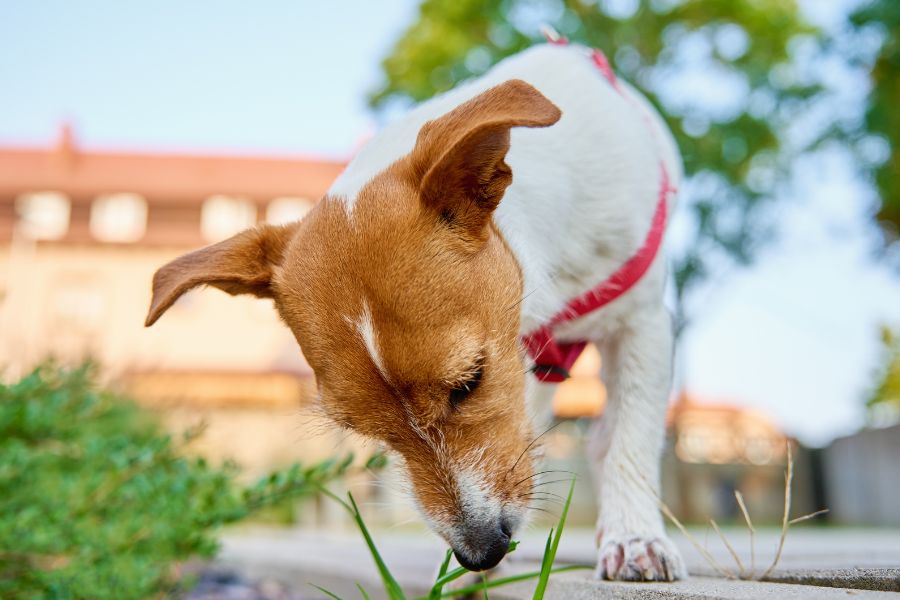
If you’ve ever caught your dog nibbling on the lawn, you may have wondered, does grass-eating mean my dog is sick? Many pet owners worry when dogs eat grass, especially if it leads to vomiting. The truth is, grass-eating is common, and in most cases, it is not a sign of illness.
In this guide, we’ll explain why dogs eat grass, when a dog eats grass, when vomiting becomes a concern, whether dog grass is safe, and how to stop a dog from eating grass if it becomes excessive. As veterinarians, we’ll also outline the warning signs that signal a deeper health issue.
Why Do Dogs Eat Grass?
Dogs eat grass for several reasons, and most are harmless. Studies suggest that up to 68 to 80 percent of dogs have eaten grass at some point. It is considered normal canine behavior.
Common reasons include:
- Natural instinct: Wild canines consumed plant matter as part of their diet.
- Mild stomach upset: Some dogs may eat grass to induce vomiting.
- Boredom or anxiety: Dogs left alone outdoors may chew grass for stimulation.
- Dietary deficiencies: Rare, but low-fiber diets may encourage grazing.
- Taste or texture preference: Some dogs simply like the feel or flavor.
If your dog appears healthy, active, and maintains a normal appetite, occasional grass eating is typically not a medical concern.
Is Dog Grass Safe?
In most cases, yes, grass itself is not toxic. However, whether dog grass is safe depends on the environment.
Grass can become dangerous if it is:
- Treated with pesticides or herbicides
- Fertilized with chemicals
- Contaminated with parasites
- Moldy or exposed to harmful bacteria
Even untreated grass can irritate the stomach lining, especially if swallowed quickly or in large amounts. Long blades may also cause gagging.
If your dog regularly grazes in public parks or unknown yards, you should monitor it closely.
When a dog eats grass, and Vomiting Happens
It is common for a dog eats grass vomiting episode shortly after grazing. The fibrous texture of grass can tickle the throat or stomach lining, triggering a gag reflex.
Occasional vomiting that happens once and resolves quickly is usually not serious.
However, vomiting becomes concerning if:
- It happens repeatedly
- Your dog vomits without eating grass
- There is blood in the vomit
- Your dog appears lethargic
- Diarrhea accompanies the vomiting
- Appetite decreases
Frequent vomiting may indicate gastrointestinal inflammation, parasites, dietary intolerance, or more serious conditions such as pancreatitis.
Warning Signs Your Dog May Be Sick
While most cases of dogs eating grass are harmless, there are red flags to watch for.
1. Excessive Grass Eating
If your dog suddenly starts eating grass obsessively or daily, it may indicate nausea, acid reflux, or intestinal discomfort.
2. Behavioral Changes
Signs such as hiding, whining, pacing, or reduced energy can signal illness.
3. Persistent Vomiting or Diarrhea
More than one vomiting episode in 24 hours is worth a call to your veterinarian.
4. Loss of Appetite
A dog eating grass sick often refuses regular food.
5. Abdominal Pain
Watch for:
- Hunched posture
- Sensitivity to touch
- Restlessness
These symptoms could indicate gastritis, parasites, or blockage.
Medical Causes Behind Grass Eating
In some cases, grass-eating can be linked to medical issues, including:
- Gastritis
- Inflammatory bowel disease
- Intestinal parasites
- Acid reflux
- Pancreatitis
For example, a dog with chronic mild nausea may eat grass frequently in an attempt to soothe discomfort. If your dog eats grass every morning before breakfast and vomits yellow bile, this may indicate bilious vomiting syndrome.
A proper veterinary exam may include:
- Physical examination
- Fecal testing
- Bloodwork
- Dietary review
Should You Try to Stop Dog Eating Grass?
If grass-eating is occasional and your dog is otherwise healthy, there is no urgent need to intervene.
However, you may want to stop your dog from eating grass if:
- Chemicals are present on your lawn
- Vomiting happens frequently
- Grass eating becomes obsessive
Here are practical steps:
Improve Diet Quality
Switching to a balanced, high-quality diet with appropriate fiber can help.
Add Mental Stimulation
Provide:
- Puzzle feeders
- Daily walks
- Training sessions
- Interactive toys
Bored dogs often develop repetitive habits.
Manage Outdoor Time
Supervise yard time and redirect attention with toys or commands.
Rule Out Health Issues
If you suspect your dog’s eating grass is more than a habit, schedule a veterinary visit.
Puppies vs Adult Dogs
Puppies explore the world with their mouths. Grass chewing in young dogs is often curiosity-driven.
Adult dogs that suddenly develop grass-eating habits deserve closer evaluation. Behavioral change in mature pets often signals an underlying issue.
How Veterinarians Evaluate Grass Eating
When clients ask whether dogs eat grass because they are sick, we assess:
- Frequency of behavior
- Presence of vomiting
- Stool consistency
- Diet history
- Recent stress changes
In most healthy dogs, reassurance is all that is needed. But we take repeated vomiting seriously, especially in senior pets.
Conclusion
So, does grass-eating mean your dog is sick? In most cases, no. Dogs eat grass for instinctive, behavioral, or minor digestive reasons. Occasional dog eats grass vomiting episodes are typically harmless.
However, frequent vomiting, appetite changes, or behavioral shifts should not be ignored. If you are unsure whether dog grass is safe or if you need help to stop your dog from eating grass, a professional evaluation provides peace of mind.
If your dog’s grass-eating behavior concerns you, schedule an appointment with Riverbank Animal Hospital. Early evaluation ensures your pet stays healthy and comfortable.
FAQs
Q1: Why do dogs eat grass if they are not sick?
Ans: Many dogs eat grass out of instinct, boredom, or taste preference. Most healthy dogs that eat grass are not sick.
Q2: Should I worry if my dog eats grass and throws up?
Ans: Occasional vomiting after grass eating is common. Repeated vomiting or other symptoms require veterinary evaluation.
Q3: Is dog grass safe to eat?
Ans: Untreated grass is generally safe, but lawns treated with chemicals or fertilizers can be harmful.
Q4: How do I stop a dog from eating grass?
Ans: Improve diet quality, increase enrichment activities, and supervise outdoor time. Consult your veterinarian if behavior persists.
Q5: Does grass eating mean my dog has parasites?
Ans: Not necessarily. While parasites can cause nausea and grass eating, most cases are behavioral and not parasite-related.